EN/FR
Hedley Jones, the Man Who Made Sound Systems Possible
When the story of the birth of Jamaican sound system culture is told, the same names always come up : Tom the Great Sebastian, Duke Reid, Sir Coxsone Dodd, and King Edwards. They all became famous to make Kingston dancing. But behind these public figures stood a far lesser-known man whose contribution was just as crucial : Hedley Jones. While the others pioneered new ways of bringing music to the people, Jones invented the equipment that made it all possible. Without his work, there simply would not have been enough sound coming through the speakers to bring a dancehall to life — not enough power for Duke Reid to impress a crowd, nor enough bass for Daley, years later, to have something to perfect.
From Musician to Engineer
Jones grew up in a rural Jamaica, where his uncle, a pastor, taught him to play the guitar and organ. Equally passionate about music and craftsmanship, he built his own cello at the age of fourteen, followed by a banjo to play mento in his village dancehall — a dual calling, combining musical instruments and tools, that would stay with him throughout his life.
After becoming a teacher, he soon left his parish for Kingston, where he took on a succession of jobs: gramophone repairman, cabinetmaker, tailor, bus driver, and watchmaker, before becoming a journalist and proofreader, first at the Jamaica Times and later at the Daily Gleaner. Meanwhile, he continued performing in the capital's dancehalls, where mento now shared the stage with American jazz.
Far from being merely a chaotic career path, this combination of manual and intellectual trades shaped a man who understood both the mechanics of an object and the musical tastes of an audience — a rare combination that would prove decisive in the years to come.
Army as formation
In 1943, Jones joined the Royal Air Force as a radar technician. Three years spent in England, working with some of the most advanced military communication and radar technologies of the time, made him one of the most highly skilled technicians of his generation — some would even go describe him as an electronics genius of the 1940s. When he returned to Jamaica, he brought back more than just equipment: he brought knowledge. Modern wiring diagrams, amplification techniques, a thorough understanding of communication devices — a wealth of technical expertise that no one else on the island possessed at such a level at the time. This transfer of knowledge, almost accidental — a man trained for war putting his expertise at the service of music and celebration — represents one of the pivotal, yet largely overlooked, moments in this entire story.
Bop City, a Laboratory for Jamaican Sound
Back in Kingston in 1946, Jones opened a radio repair shop at 136 King Street. Bop City quickly became much more than an electronics store: as the record market boomed, he added a vinyl record section and began playing music outside his shop to attract customers, as many Kingston shopkeepers were doing at the time — a practice almost identical to that of Tom the Great Sebastian, just a few streets away, around the same time.
But commercially available equipment did not satisfy him. He decided to build his own amplifiers and speakers — and it was this seemingly insignificant decision that would change everything.
The Problem He Solved: Producing Enough Sound to Fill a Dancehall
The Second World War had led to a shortage of Jamaican live bands, just as advances in electronics were making a new way of getting people dancing possible: recorded and amplified music. Jones recognized this shift before others did. His goal was no longer simply to repair radios, but to produce sound powerful enough to replace an entire orchestra.
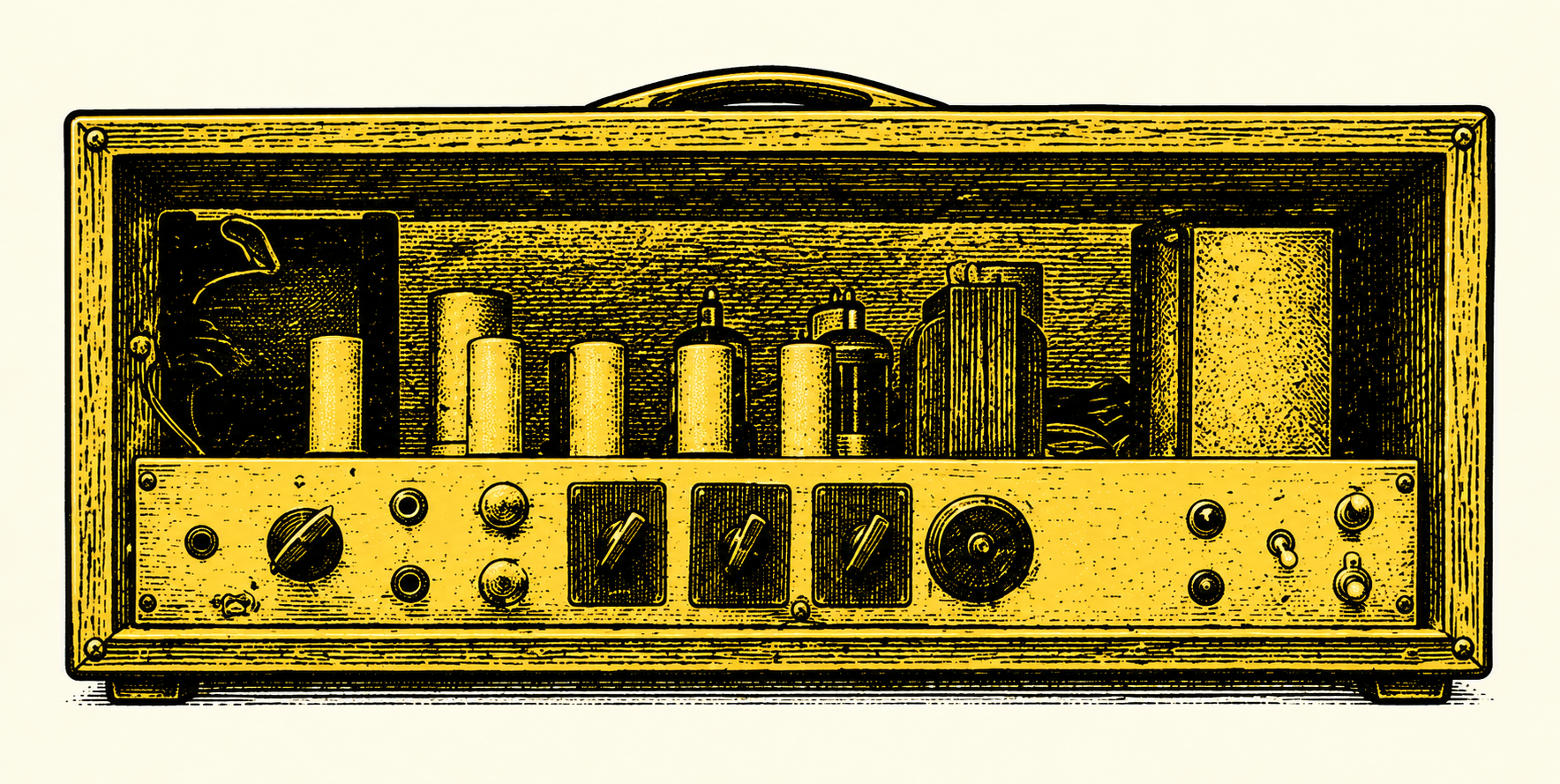
He designed vacuum-tube amplifiers more powerful than anything commercially available and built speaker cabinets capable of delivering that power without distortion — particularly in the low frequencies, which would become the hallmark of Jamaican sound system culture.
In the early 1950s, he tackled another recurring problem: records were pressed at different volume levels, meaning that a dance could alternate between tracks that were too quiet and others that sounded distorted. Jones developed one of Jamaica's first preamplifiers, positioned between the turntable and the amplifier, allowing bass, midrange, and treble frequencies to be adjusted independently. For the first time, an operator could shape the sound rather than simply play it.
And it was an amplifier built in his workshop that, in 1947, prompted Tom the Great Sebastian to give a name to the complete setup he had just ordered: sound system. The very term that gives this entire story its title was born directly out of Jones's work.
His Role: The Engineer Behind a Technological Revolution
Jones's contribution was neither musical nor entrepreneurial — it was purely technical, yet it made everything else possible. Without sufficiently powerful amplifiers, there could be no open-air dancehalls. Without preamplifiers, there could be no control over the sound, no deep bass, none of that distinctive sonic signature that would come to define Jamaican sound system culture to this day.
Jones was not the one who made Kingston dance. He gave others the means to do so — a behind-the-scenes role, almost invisible, but one without which none of the names usually associated with sound system culture would have had the tools to build their empires.
His Influence: A Second Lineage of Sound System Culture
Jones never kept his knowledge to himself. He trained several apprentices, the best known of whom were Freddie Stanford and Durant "Jackie" Eastwood. Their influence would be immense and direct: it was Eastwood who built the first amplifier for Sir Coxsone's Downbeat, and it was Eastwood, followed by Stanford, who, through increasingly reliable amplifiers — the blue amplifier, then the monstrous sixteen-tube models — gave King Edwards The Giant the power that would allow him to dominate Kingston for a time, even causing Duke Reid himself to flop one night at Tewari Crescent.
This passing down of expertise reveals a second lineage, just as essential as that of the great sound system operators: Hedley Jones, followed by Eastwood and Stanford, then King Edwards, Tom the Great Sebastian, and Coxsone Dodd. Alongside the lineage of entrepreneurs who made the crowds dance, there was therefore a lineage of engineers who invented the tools that made the experience possible — a tradition that would be carried forward a decade later by another technician obsessed with deep bass, Lloyd "The Matador" Daley.
Jones himself would extend his influence beyond his workshop, helping to set up studio equipment and record-pressing facilities, before contributing his technical expertise to the early days of Studio One — unknowingly bringing the connection between his work in the 1940s and the music industry that Coxsone Dodd would build twenty years later.
The Legacy of Hedley Jones
History has remembered the names of those who made the dancehalls shake. It has more easily forgotten the man who made that experience possible.
If Tom gave the sound system its name, if Duke Reid turned it into an empire, if Coxsone Dodd gave it a musical soul, if King Edwards pushed its power to the extreme, and if Daley perfected its acoustic language, Hedley Jones laid its very foundations: without his work, none of those empires would have had a sound powerful enough to match their ambitions.
A musician turned technician, a former radar specialist who put his expertise at the service of popular music, he built the amplifiers, invented the three-band preamplifier, and, above all, trained an entire generation of technicians who would each, in their own way, shape the sound of the island's greatest sound systems.
The history of sound system culture, then, is not only the story of the men who made Kingston dance. It is also the story of the men who invented the sound.